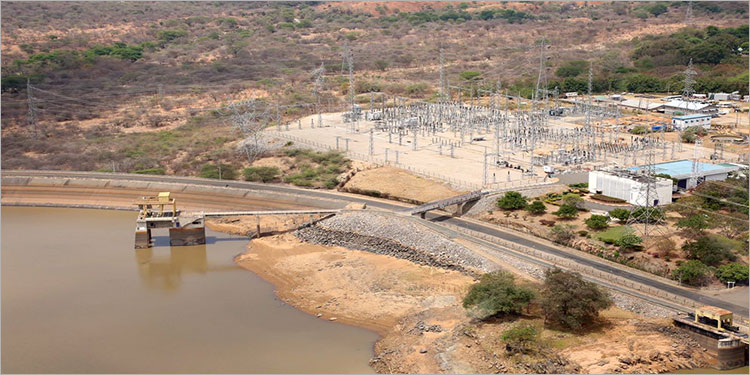
 The government has unveiled strategies to augment the Masinga dam, in an effort to strengthen the energy capacity of the nation. Positioned in Embu and Machakos County, Masinga Dam is classified as one of the seven hydro dams and is deemed the largest reservoir in the country along the Tana River.
Standing 60 meters tall and extending 2,200 meters in length, the dam has a substantial storage capacity of around 1.56 billion cubic meters, covering an area of roughly 120 km². Plans for its expansion were announced by the National Environmental and Management Authority (NEMA) in a gazette notice dated January 2, which included an Environmental Impact Assessment Study Report for the proposed project.
The project aims to increase the height of the spillway wall of the dam by 1.5 meters and to boost the volume of water contained in the reservoir by 173 hm3. Additionally, the project will include the installation of a new spillway alongside the existing spillway to enhance the discharge capacity efficiency of the dam.
As per NEMA, the initiative is designed to improve the flood capacity for managing downstream flooding on the Tana River while also increasing energy production. Masinga Dam is classified as one of the five dams that comprise the Seven-Forks cascade of dams. This is owing to its upstream placement in the Seven-Forks cascade and the more substantial size of its reservoir,” the communication noted. The project is said to have an immediate catchment that crosses through Embu and Machakos counties, with the expected extended zone reaching into Kitui, Garissa, and Tana River counties,” it mentioned.
As a component of environmental compliance, NEMA has indicated that the projected impacts of the project may include risks to occupational health and incidents, health hazards and diseases, increased social disturbances, significant levels of noise and vibration, along with the degradation of vegetation. The project contractors will need to establish measures that include delivering extensive safety training for workers, formulating a site Impact Management plan, and enforcing safe working procedures to avoid incidents.