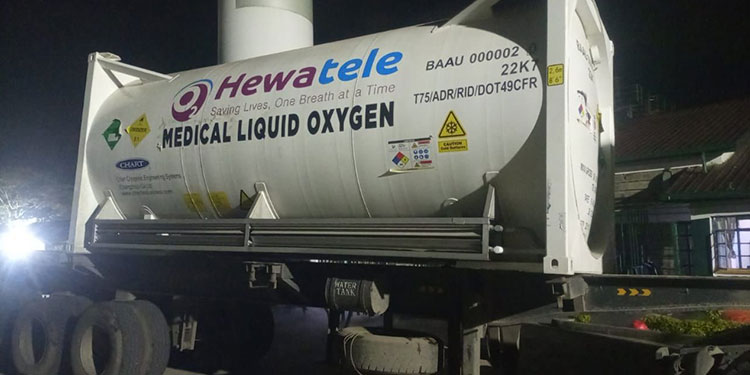
Kenya’s persistent shortage of medical oxygen could soon improve with the development of the country’s first liquid oxygen manufacturing facility by healthcare solutions company Hewatele.
The plant, currently under construction at Tatu Industrial Park, is expected to be completed by the end of the first quarter of 2026. Once operational, it is set to greatly expand local oxygen production and reduce Kenya’s dependence on imports, which presently make up around 75 percent of the nation’s supply.
On Monday, leaders from Finnish development financier Finnfund, together with Riina‑Riikka Heikka, Finland’s Ambassador to Kenya, toured the construction site. They described the initiative as an important step toward strengthening Kenya’s healthcare system.
Every year, thousands of lives in Kenya are lost because hospitals cannot access enough medical oxygen, with mothers and children among the most vulnerable groups.
Currently, imported liquid oxygen can take four to six weeks to arrive, leaving many healthcare facilities exposed to critical shortages.
According to Hewatele Chief Executive Officer Zulfiqar Wali, the new plant will significantly reduce delivery times and provide a more dependable supply of oxygen.
“Oxygen distribution currently takes between seven and fifteen days. This plant will cut delivery times to just 24 hours, ensuring timely access where it is needed most,” Dr Wali said.
When fully operational, the facility is projected to produce about 20 tonnes of liquid oxygen each day, meeting more than half of the country’s demand.
The plant is expected to serve roughly 300 healthcare facilities nationwide and could help save hundreds of lives annually.
The project has attracted approximately USD 20 million (about Ksh 2.5 billion) in funding. Of this amount, USD 3.5 million (around Ksh 451 million) was provided by the Government of Finland through Finnfund.
Additional investors include Grand Challenges Canada, Soros Economic Development Fund, UBS Optimus Foundation of Switzerland, and the Africinvest‑THF Programme.
Finnfund Managing Director and CEO Jaakko Kangasniemi stated that the investment highlights how development finance can address urgent public health needs while also remaining commercially sustainable.
“This project addresses a critical need in Kenya while successfully combining strong commercial potential with meaningful development impact,” he said.
To improve distribution, Hewatele has already established liquid oxygen refilling stations in Kisumu and Mombasa, along with five gas distribution depots positioned in key locations across the country.
The company is also implementing a hub-and-spoke distribution system, installing cryogenic storage tanks at major national referral hospitals to ensure a steady and reliable oxygen supply.
In addition to boosting production, Dr Wali called on the government to support domestic manufacturing by offering subsidised electricity under the Bottom‑Up Economic Transformation Agenda (BETA) and by including medical oxygen costs in reimbursements under the Social Health Insurance Fund (SHIF).
He noted that such measures would allow hospitals to plan and budget more effectively for this essential medical resource.
With plans to add more depots and expand into a second phase targeting the broader East African region, the Hewatele initiative is being viewed as a significant advancement for Kenya’s healthcare infrastructure and regional health security.