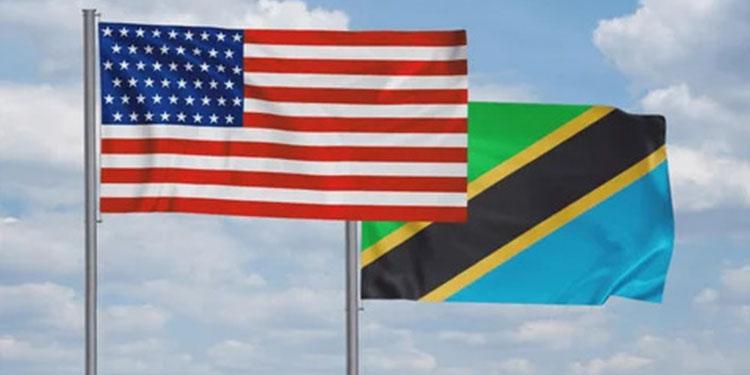
The United States and Tanzania have signed a five-year, $3.1 billion bilateral memorandum of understanding (MoU) to strengthen Tanzania’s healthcare system and improve the country’s ability to prevent and respond to infectious diseases.
As part of the agreement, Tanzania will invest more than $1.8 billion in its health sector over the next five years, while the US government, in collaboration with Congress, plans to contribute over $1.3 billion during the same period.
The MoU was concluded under the Trump administration’s America First Global Health Strategy (AFGHS)
It outlines joint efforts to reinforce health systems, modernise digital health infrastructure, improve disease surveillance, and enhance national health security.
Tanzania’s Minister of Health, Mohammed Mchengerwa stated: “This MoU demonstrates the Government of Tanzania’s commitment to investing in the health and well-being of our people.” “Our co-investment will strengthen health infrastructure, expand the health workforce, improve disease surveillance, and accelerate the development of modern laboratory and digital health systems.”
The partnership also supports Tanzania’s goal of building a single, integrated national digital health ecosystem covering clinical services, health financing and insurance, supply chain management, public health and disease surveillance, and citizen-focused digital services.
In addition, the MoU includes plans to establish and operationalise the Tanzania National Public Health Institute at both national and subnational levels.
It also seeks to strengthen clinical research capacity across Tanzanian health research institutions and advance malaria elimination initiatives in Zanzibar.
Another major focus is the development of an integrated and interoperable laboratory network across the country’s healthcare system.
The network is designed to meet the targets of the 7-1-7 outbreak detection and response framework, which aims for suspected disease outbreaks to be identified within seven days, reported to public health authorities within one day, and effectively responded to within the following seven days.
Jeanne Clark, acting chargé d’affaires at the US Embassy in Tanzania, said: “By investing together, we are strengthening Tanzania’s ability to prevent, detect, and respond rapidly to health threats, while building self-sustaining systems that can continue delivering high-quality services for generations.”