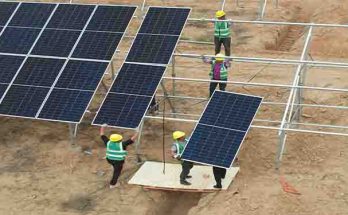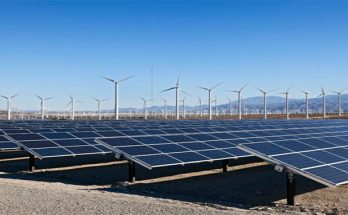

At its cutting-edge Tatu City manufacturing facility, Kenya Wine Agencies Limited (KWAL) has formally commissioned a new 700kV rooftop solar power plant, a significant step toward the company’s long-term sustainability and energy-efficiency objectives.
This week marked the final switch-over of the system, which was created under a Power Purchase Agreement (PPA) and finished after eight months of installation.
Lina Githuka, Managing Director of KWAL, stated, “This investment reflects our broader ambition to accelerate our push to drive efficiencies, build a more sustainable business, and embrace the opportunity to be part of Kenya’s ongoing renewable energy journey.”
The Solar Plant is a grid system that uses solar energy to power factory activities during the day and smoothly switches over to the national grid at night. This strategy maximizes the usage of renewable energy while preserving continuous operational dependability.
Now that the new plant is up and running, KWAL will generate at least 15% of its yearly electricity from solar energy, which translates to an annual savings of 7.5% in lower energy costs based on the factory’s consumption statistics.
KWAL’s determination to make solar energy investments is consistent with its continuous goal of implementing green manufacturing techniques.
Since its start, KWAL’s Tatu City facility has been accredited by EDGE as an energy and water-efficient operation that prioritizes renewable energy sources. The solar project supports both Kenya’s objective of obtaining 100% renewable energy by 2030 and KWAL’s broader sustainability policy.
KWAL will have better access to low-interest green financing for the construction of energy-efficient infrastructure thanks to the EDGE certification.
Our certification bolsters our continuous efforts to make sure we strive for a reduced carbon footprint for our present operations and access sustainable solutions for our upcoming production requirements. To maximize our utilization of renewable energy sources, we plan to gradually increase our solar capacity to 1,500kv, stated Mwenda Kageenu, Director, Supply Chain, KWAL.
The IFC, a member of the World Bank Group, created the EDGE green building certification system, which accredits structures that have improved their resource efficiency.
Every year, buildings that have attained carbon neutrality in their operations are granted the zero-carbon certification.
It is the highest EDGE green building standard recognized worldwide. In order to achieve carbon neutrality during operations, an EDGE Zero Carbon building must receive final certification at the EDGE advanced level with at least 40% energy savings and meet all of its remaining energy needs with renewable energy sources or buy carbon offsets.
The International Finance Corporation (IFC) and OFGEN Africa, the contracted PPA provider, were among the important partners with whom the project was carried out.
The Energy Petroleum and Regulatory Authority (EPRA), Tatu Power, and Tatu Development Control Company have all granted the necessary licenses for the ground-breaking project at KWAL’s headquarters.