
The establishment of a cutting-edge regional laboratory in Nyeri County has been initiated by the Kenya Plant Health Inspectorate Service (KEPHIS).
It is anticipated that the laboratory, which will be situated next to the Kenya School of Agriculture and the Wambugu Farm Agricultural Training Center, will also benefit counties in the Central and Eastern regions.
Prof. Mwenda Mutui, Managing Director of KEPHIS, claims that the facility will improve the services offered, such as advanced laboratory analysis for soil, water, and animal feeds, plant health inspection, and seed certification. To promote agricultural innovation and research, it will also include demonstration plots for National Performance Trials (NPT).
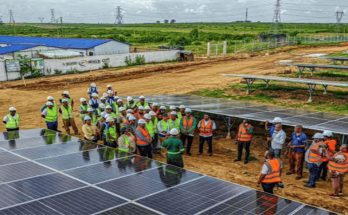
Mutahi Kagwe, the Cabinet Secretary for Agriculture and Livestock Development, accompanied a group of KEPHIS officials on an inspection tour of the facility’s 15-acre site on Wednesday. According to the CS, the cutting-edge lab will develop the framework needed to boost agricultural output despite the declining amount of arable land used for food production.
The size of farms in Nyeri County and the surrounding area is not increasing, as you are aware. This implies that we must now produce more food per unit and per acre than we did in the past in order to boost productivity for our farmers.
The only way to achieve this is to make sure that we use extremely advanced farming techniques and husbandry in order to increase production per acre. And having institutions that can assist us is the only way to reach that scientific goal,” Kagwe stated.
As you are aware, we will not expand the area, but it is crucial for us to boost productivity. The CS continued, “We can only boost productivity where we properly test the soil, where the seeds we use are properly certified, and where the husbandry for the same is the highest in the world.”
According to Kagwe, the new lab will serve as a backup facility for the nation’s existing KEPHIS labs and will be essential to expanding the nation’s ability to conduct more thorough soil and seed studies.
According to the CS, the state-of-the-art laboratory will also use cutting-edge technology to expedite soil testing, soil and crop disease analysis, and seed certification procedures in order to further increase its efficiency.
We will employ the more recent testing techniques in our new laboratory. We will be able to use extremely digital testing techniques. According to the CS, “the idea here is that we have the technological capability to accelerate the testing process and simulate the seed samples within our laboratories here to see how plants can behave in our climates and how they will behave when they come for real planting in the farms in a shorter time.”
Additionally, the CS demanded that those found selling counterfeit seeds be charged with treason. According to Kagwe, his ministry will step up its efforts to combat the nation’s illicit distributors and vendors of uncertified seed.
Kagwe challenged the National Assembly to enact legislation that would impose harsher penalties on those who sell fake seeds. He claimed that since the sale of fake seeds directly jeopardizes the country’s food security and constitutes economic sabotage, those who engage in this dishonest business should face the harshest penalties.
“It is crucial that our security forces are aware of this issue and take swift action against individuals who are selling counterfeit seeds. It is important to treat fake seeds as a national security concern. It is appropriate to prosecute those who sell counterfeit seeds as traitors. Really, it is treason as we all know what happens when the nation’s citizens are hungry. Selling counterfeit seeds is, in my opinion, a very significant problem that needs to be treated as such, Kagwe said.
Additionally, he advised farmers to buy verified seeds from authorized wholesalers to avoid becoming victims of con artists.
“The crucial advice we are giving farmers is to avoid purchasing seeds that have not been certified by KEPHIS because there are individuals out there who claim to have a license to sell you seeds and seedlings when, in reality, they have not been certified. Making sure farmers understand the significance of only purchasing certified seeds is crucial, he stated.