
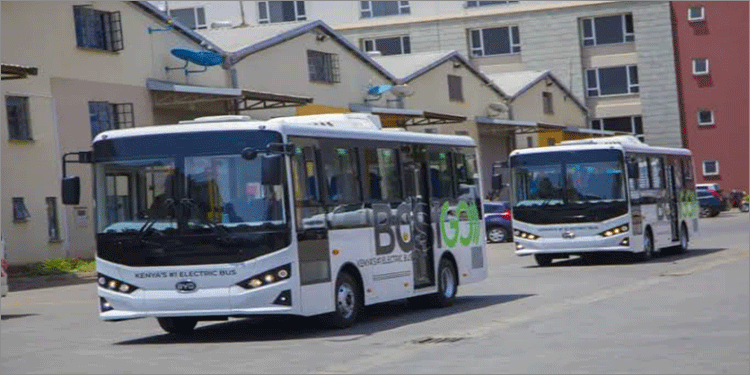

Kenya has signed a Memorandum of Understanding (MoU) for a proposed investment of Ksh390 billion aimed at strengthening electric vehicle manufacturing and advancing green mobility across the country.
The agreement, signed on Tuesday, October 6, 2026, outlines plans to develop electric vehicle assembly facilities, charging infrastructure, and supporting value chains. President William Ruto stated that the MoU establishes a framework for building an integrated green mobility ecosystem, describing the proposed investment as one of the largest electric mobility commitments in the region.
As part of the project, one manufacturing facility is expected to have an annual production capacity of 50,000 four-wheelers, while another plant will be capable of producing up to 100,000 two-wheelers and light mobility vehicles annually.
The proposed investment is projected to generate approximately 2,000 direct jobs and over 20,000 indirect employment opportunities across supplier networks, logistics, and service-related industries. Additionally, it could create up to 80,000 opportunities in fleet management.
President Ruto highlighted that the initiative would strengthen Kenya’s domestic automotive manufacturing capabilities, reduce dependence on imported fully assembled vehicles, and encourage greater local production and value addition. He further emphasised that local vehicle manufacturing would help retain more economic value within the country while creating business and employment opportunities for technicians, engineers, suppliers, and other industry stakeholders.
The project also proposes the establishment of 1,000 solar-powered charging hubs and a digital platform designed to manage up to 100,000 electric vehicles, supporting the development of a comprehensive green mobility network.
This investment proposal comes as Kenya continues to accelerate the growth of its electric mobility industry. In February 2026, the government launched the National Electric Mobility Policy, which aims to attract investment in EV manufacturing, vehicle assembly, and charging infrastructure.
According to the Ministry of Roads and Transport, Kenya recorded a cumulative total of 39,324 registered electric vehicles by 2025, compared with just 1,378 in 2022, highlighting the rapid expansion of the country’s EV market.
To further encourage adoption, the government has introduced tax incentives, including zero-rated VAT on electric buses, bicycles, motorcycles, and lithium-ion batteries.
Kenya is also strengthening its commitment to sustainable transportation through initiatives such as the introduction of dedicated green number plates for electric vehicles. These measures reflect the country’s ongoing efforts to promote clean mobility, encourage investment in the automotive sector, and support its broader environmental sustainability goals.