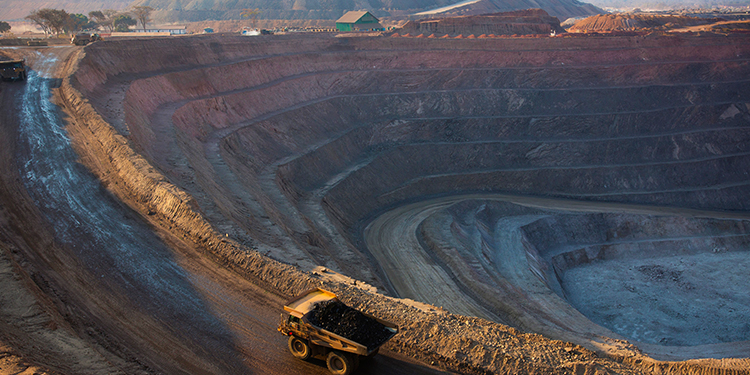

The Ministry of Mining, Blue Economy, and Maritime Affairs has issued a tender for the commercial exploitation of copper reserves in Kamacabi, Tharaka Nithi County, allowing Kenya to profit on a strengthening global commodity cycle that favours base metals. Copper, a critical commodity, is at the centre of a more concerted effort to entice private capital into the extractives sector as global demand grows. The winning bidder will receive a prospecting permit for the approximately 196 square km block and will be fully responsible for exploration, mine development, and processing. J.P. Morgan Global Research predicts that prices would grow to $12,500 per metric tonne in the second quarter of 2026, with a year-end average of $12,075/mt.
Gregory Shearer, head of Base and Precious Metals Strategy at JP Mogan, claims that fragmented stockpiles and limited supply are making a compelling argument for the metal’s upside. In a recent prediction, he stated, “These dynamics are enough to push prices above $12,000/mt in the first half of 2026. The market is also changing due to new demand drivers. The demand for copper might increase by almost 110,000 tonnes annually to 475,000 metric tonnes in 2026 alone due to the rapid expansion of data centre infrastructure, which is driven by the rise in cloud computing and artificial intelligence.
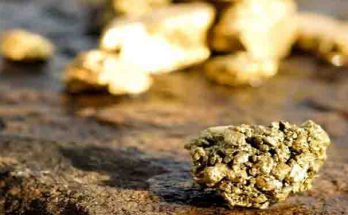
Early indications of economic potential are seen in Kenya’s Kamacabi block. Surveys reveal copper mineralisation in intrusive dykes, pegmatites, and biotite gneiss, with obvious instances of azurite and malachite. According to laboratory findings, copper concentrations in Kamacabi, Gatue, Kiamiramba, and Maragwa range from 1% to 31%. Chalcopyrite ore grades of up to 19.5% are revealed by additional atomic absorption spectroscopy (AAS) testing, and a 200-metre geophysical anomaly has been recognised as a possible high-value zone.
In order to facilitate exploration, the ministry will give bidders access to radiometric and magnetic datasets from a recent statewide aerial geophysical survey. Strong financial capabilities, a track record of success in copper mining and exploration, and the competence to carry out large-scale projects from development to processing are requirements for interested companies. Strong corporate governance frameworks, prior experience working in delicate ecosystems, and the use of sustainable techniques, such as renewable energy, are further requirements. Additionally, the government is giving local value addition, community involvement, and environmental responsibility top priority.