
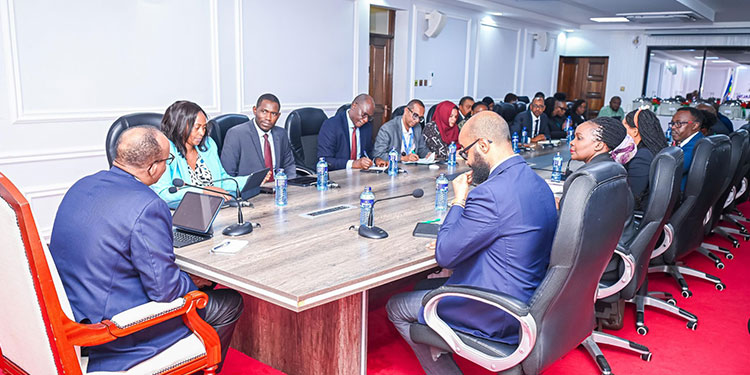
Kenya is stepping up efforts to reinforce its healthcare system through an enhanced partnership with the United States and new discussions with a leading global pharmaceutical company aimed at improving access to cancer prevention, diagnosis and treatment.
Health Cabinet Secretary Aden Duale said the initiatives form part of the government’s broader strategy to accelerate Universal Health Coverage (UHC), strengthen the Social Health Authority (SHA) and ensure more people have access to quality healthcare services.
Speaking after leading a meeting of the Joint Oversight Committee under the Kenya–United States Health Cooperation Framework in Nairobi, Duale said the collaboration represents a move away from the traditional donor-funded approach toward a government-driven model centred on national priorities and sustainable long-term investment.
The meeting brought together senior officials from Kenya and a U.S. delegation headed by Chargé d’Affaires Susan Burns. Participants assessed progress under the cooperation framework, noting that the implementation plan is close to completion, a comprehensive risk assessment has begun and a Strategic Objective Agreement has been approved.
According to the Ministry of Health, the partnership will support investments in several priority areas, including the Social Health Authority, primary healthcare, digital health infrastructure, disease surveillance, workforce development, health security and resilient medical supply chains.
Duale also welcomed the establishment of a County Transition Taskforce, describing it as an important step toward developing an evidence-based roadmap for strengthening devolved health services while maintaining uninterrupted delivery of essential healthcare across the country.
In a separate engagement, the Health Cabinet Secretary met with executives from global biopharmaceutical company Merck Sharp & Dohme (MSD) to discuss expanding access to cancer prevention, early detection and treatment in Kenya.
The discussions come as the country continues to register around 44,000 new cancer cases each year, making cancer one of the leading causes of illness and mortality nationwide.
Key proposals included broadening Human Papillomavirus (HPV) vaccination to help prevent cervical cancer, increasing public awareness campaigns, expanding mobile screening and diagnostic services, supporting locally driven cancer research, strengthening healthcare worker training and encouraging technology transfer.
The two parties also explored strategies to improve the availability of advanced cancer therapies, including pembrolizumab (Keytruda), within Kenya’s public healthcare system.
The Ministry of Health and MSD agreed to continue working together through further discussions on strategic investment, innovation and technical collaboration aimed at strengthening the country’s cancer care system and improving access to prevention, early diagnosis and treatment.